

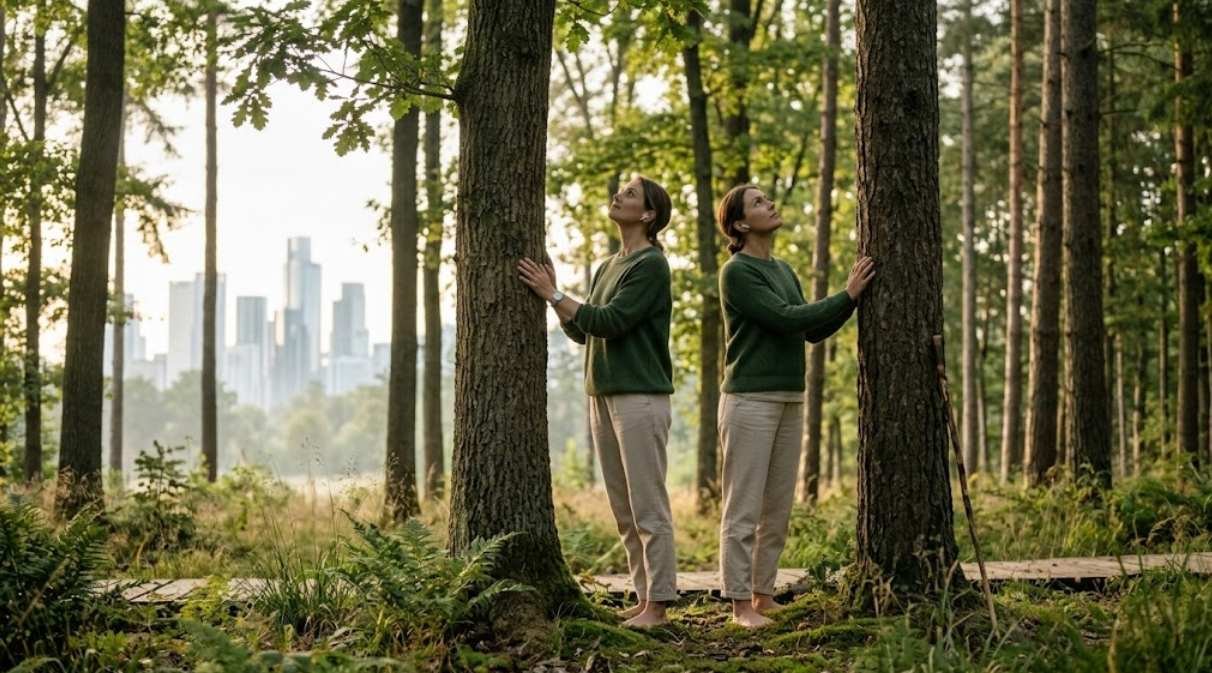
Forest Therapy Hub is recognized as a global platform for forest therapy professionals, supporting education, training, and the growth of nature-based wellness practices around the world. Through research-based approaches and professional development, it helps practitioners understand the relationship between humans and the natural environment.
The Growing Importance of Nature Connection in Modern Life
Modern lifestyles often keep people disconnected from natural surroundings. Long working hours, digital screens, urban environments, and busy routines can reduce the time people spend outdoors. This growing separation from nature has increased interest in practices that help restore balance, mindfulness, and a deeper connection with the environment.
Nature connection is more than simply spending time outside. It involves developing awareness, appreciation, and a meaningful relationship with the natural world. Forest therapy and guided nature practices encourage people to slow down, observe their surroundings, and build a stronger emotional bond with the environment.
Benefits of Building a Strong Connection With Nature
A stronger relationship with nature can support overall wellbeing in many ways. Spending mindful time in forests, parks, and natural spaces allows people to step away from daily stress and focus on the present moment.
Some important benefits include:
- Reduced stress and improved relaxation: Natural environments can create a calming atmosphere that helps the mind recover from daily pressure.
- Better mental clarity: Time outdoors can support reflection, creativity, and clearer thinking.
- Improved emotional wellbeing: Nature-based activities encourage mindfulness and positive feelings.
- Stronger environmental awareness: A personal connection with nature often increases care for ecosystems and conservation.
- Greater sense of balance: Regular interaction with natural spaces can help people create healthier lifestyle habits.
How Forest Therapy Supports Human-Nature Relationships
Forest therapy is a guided practice that encourages people to connect with forests through mindful observation and sensory awareness. Unlike a regular walk, forest therapy focuses on slowing down and engaging with nature through sights, sounds, smells, textures, and feelings.
Participants may practice activities such as:
- Mindful walking through natural areas
- Observing plants, trees, and wildlife
- Breathing exercises outdoors
- Quiet reflection in natural surroundings
- Developing awareness of seasonal changes
These practices help people recognize that humans are deeply connected with the natural environment rather than separate from it.
Becoming a Professional in Nature Connection Practices
As interest in nature-based wellness continues to grow, trained professionals are helping individuals and communities reconnect with natural spaces in meaningful ways. Proper education allows practitioners to guide safe, respectful, and effective nature connection experiences.
Professionals looking to develop expertise in this field can explore a nature connection program designed to build knowledge and practical skills for guiding nature-based activities.
Such programs can help participants understand ecological awareness, mindfulness techniques, facilitation methods, and the principles behind meaningful human-nature relationships.
Why Nature Connection Matters for the Future
Nature connection is becoming an important part of modern wellness because it addresses a simple human need: the desire to feel connected with the world around us. As cities continue to expand and technology becomes a larger part of daily life, creating opportunities to reconnect with nature becomes increasingly valuable.
Forest therapy professionals, educators, and guides play an important role in helping people rediscover this connection. By encouraging mindful interaction with natural environments, they support both personal wellbeing and greater respect for the planet.
