

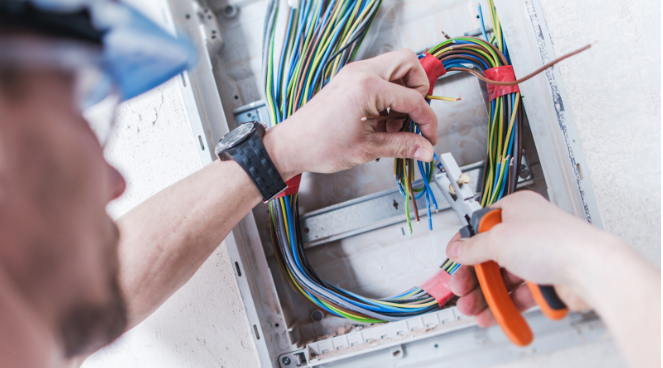
Ever had a security camera go dark at the worst possible moment? Or walked up to a thermostat that simply refuses to respond? It’s maddening, especially when the culprit turns out to be something as mundane as a bad wire connection. Here’s the thing: low voltage wiring runs everything from your doorbell to your entire data network, yet most people never really learned the fundamentals.
Get this: poor connections account for roughly 70% of system breakdowns. That means wasted money, repeat service calls, and a whole lot of frustration. This blog shows you how voltage ranges actually work and how to create connections that’ll outlive your mortgage.
Understanding Low Voltage Wiring Basics: What You Need to Know
Before you start fishing cables behind drywall, take a minute to understand what actually sets low voltage work apart from regular electrical installations. These differences aren’t just technical trivia, they affect your safety, code requirements, and which materials you’ll need.
What Makes Low Voltage Different
Low voltage wiring basics boil down to one core principle: we’re talking about systems that carry 50 volts or less. Compare that to the 120V or 240V circuits running your kitchen appliances, and you’ll see why the risk profile changes completely. Less electrical energy flowing means lower shock danger and a completely different rulebook for installation. Terminal blocks and connectors have quietly become the foundation of these systems.
In fact, the worldwide market for terminal blocks is projected to expand at roughly 4.5% CAGR between 2021 and 2027, driven largely by surging interest in automation and renewable energy. That kind of consistent growth tells you something: low voltage infrastructure isn’t optional anymore.
Fort Lauderdale’s construction scene has exploded lately, creating massive opportunities for skilled low voltage technicians, especially in smart building retrofits and brand-new residential projects. The city’s unique blend of older architecture and sleek modern towers creates installation headaches you won’t find elsewhere. Think concrete block walls, hurricane-rated outdoor connections, and constant exposure to salt air.
Anyone specializing in data network cabling in fort lauderdale faces a double challenge: battling corrosion from the coastal environment while meeting aggressive local building standards and delivering networks that can handle today’s bandwidth demands. That specific mix of weather challenges and technical requirements makes cable selection and termination absolutely mission-critical for installations that last.
Common Voltage Ranges You’ll Encounter
You’ll typically work with 12V, 24V, or 48V in residential and commercial settings. Landscape lighting? Usually 12V transformers. Security cameras and smart thermostats? Often 24V. Then there’s 48V, which shows up in Power over Ethernet configurations that deliver both data and electricity through the same cable. Understanding your project’s voltage needs drives everything downstream, wire gauge choices, voltage drop math, the whole nine yards.
Essential Components and Wire Types
Choosing the right gear makes the difference between a smooth installation and months of troubleshooting calls. Low voltage wiring for homes isn’t forgiving when you mismatch applications with cable specs.
Transformers and Power Supplies
Your low voltage system begins with a transformer or dedicated power supply that steps down standard household voltage to whatever your devices actually need. These come rated for specific amperage, which dictates how many devices can run on one circuit. Undersize your power supply and you’ll chase voltage drop gremlins forever. Oversize it and you’re just burning money for no performance gain.
Cable Selection for Different Applications
CAT6 has become the go-to for data networks, it handles gigabit speeds across 328 feet without breaking a sweat. Speaker wire selection hinges on impedance matching and run length; most residential audio uses 12-gauge or 14-gauge. Security installations might call for Siamese coax that combines video and power in one jacket, or you might run twisted pairs for IP cameras with PoE. Thermostat wire comes in different conductor counts, 18-5 for zoned systems, 18-8 when you’ve got complex HVAC with multiple heating and cooling stages.
Low Voltage Wiring Installation Techniques
Even the most expensive cable becomes useless without proper installation. Low voltage wiring installation lives or dies on attention to detail from planning through final testing.
Planning Your Cable Runs
Draw up a wiring diagram before you touch a single tool. Mark where power originates, map cable paths that dodge interference from high-voltage lines, and run the math on voltage drop for your longer runs. NEC Article 725 mandates minimum spacing when low voltage runs parallel to electrical wiring, generally 2 inches for Class 2 circuits, though you can cross at right angles. Doing this homework upfront saves you from expensive mistakes buried inside finished walls.
Proper Wire Support Methods
How you secure cables determines whether they stay put or become damaged over time. Space cable staples no more than 4.5 feet apart on horizontal runs, keeping them just loose enough that you’re not crushing the jacket. J-hooks work beautifully in accessible areas like basements. Cable ties keep bundles tidy in panels, but overtighten them and you’ll damage the conductors. Pay attention to bend radius too; sharp corners create stress points that kill cables eventually.
Mastering Low Voltage Connections
The connection point determines whether your perfectly routed cable performs flawlessly or becomes your worst nightmare. Low voltage connections require both technique and proper tools.
Soldering vs Crimping Methods
The Western Union splice with solder creates joints that are mechanically and electrically bombproof. Strip an inch of insulation, cross the wires, twist them tight around each other, then apply your iron and solder before sliding heat shrink tubing over everything. Pro tip: slide that heat shrink on *before* you solder, forgetting this classic mistake means starting completely over. Crimp connections using butt splices or ring terminals work faster when you’re facing dozens of terminations. Quality ratcheting crimpers deliver consistent results that won’t fail under tension.
Terminal Blocks for Distribution
Screw terminal blocks give you clean distribution at junction points, letting you split one source to multiple destinations without a rats’ nest of splices. Here’s something interesting: research indicates that 40% of companies switching to smart terminal blocks experienced a 30% reduction in operational problems, that’s real-world validation of their reliability edge. Mount them on DIN rails for panels that look professional and modify easily later. Push-in lever connectors like Wago-style terminals accelerate installations dramatically compared to wire nuts, though you’ll pay more per connection.
Applications for Low Voltage Wiring for Homes
Knowing where these systems get used helps you anticipate requirements and sidestep mistakes specific to each application type.
Smart Home Systems
Home automation weaves together thermostats, lighting controls, locks, and sensors into integrated systems. Most operate on 12V or 24V with centralized power from structured wiring panels. Running extra cables during initial construction costs almost nothing but saves enormous hassle when you expand later. Even “wireless” protocols like Zigbee need power, meaning even supposedly wireless smart homes require thoughtful low voltage wiring infrastructure.
Security and Surveillance
IP cameras using PoE streamline installations by pushing both data and power through a single CAT6 cable, no separate power supplies at each camera location. Traditional analog systems rely on Siamese coax with dedicated power conductors. Either approach demands smart cable routing that protects against tampering while weatherproof connections at outdoor locations prevent the moisture infiltration that destroys video quality. Running cables through conduit adds physical protection and leaves you to upgrade paths without demolishing walls.
Final Thoughts on Building Reliable Low Voltage Systems
Mastering low voltage wiring basics really comes down to three things: solid planning, quality materials, and connections done right. Whether you’re adding security cameras, upgrading your home network, or integrating smart devices, understanding voltage requirements and following code-compliant methods prevents those maddening failures that haunt sloppy work. Start with a clear design. Buy decent tools. Test everything before you seal up walls. And whatever you do, don’t rush the connections, that’s where most disasters hide. Our homes are only getting more connected, which makes these skills more valuable every single year.
Common Questions About Low Voltage Wiring
- Can I run low voltage and high voltage cables through the same holes?
NEC typically says no for safety and interference prevention. Class 2 circuits need 2-inch separation from high-voltage wiring on parallel runs, though perpendicular crossings get the green light. Always verify local codes though.
- What wire gauge should I use for 12V landscape lighting?
Depends entirely on total wattage and distance. A 100-watt load running 50 feet needs 12-gauge wire to keep voltage drop under 10%. Online voltage drop calculators make these calculations painless for your specific situation.
- Do I need a permit for low voltage installations?
This varies wildly by location. Many jurisdictions don’t require permits for basic thermostat or doorbell work, but structured cabling and security systems frequently do. Call your local building department before launching into major projects.
