

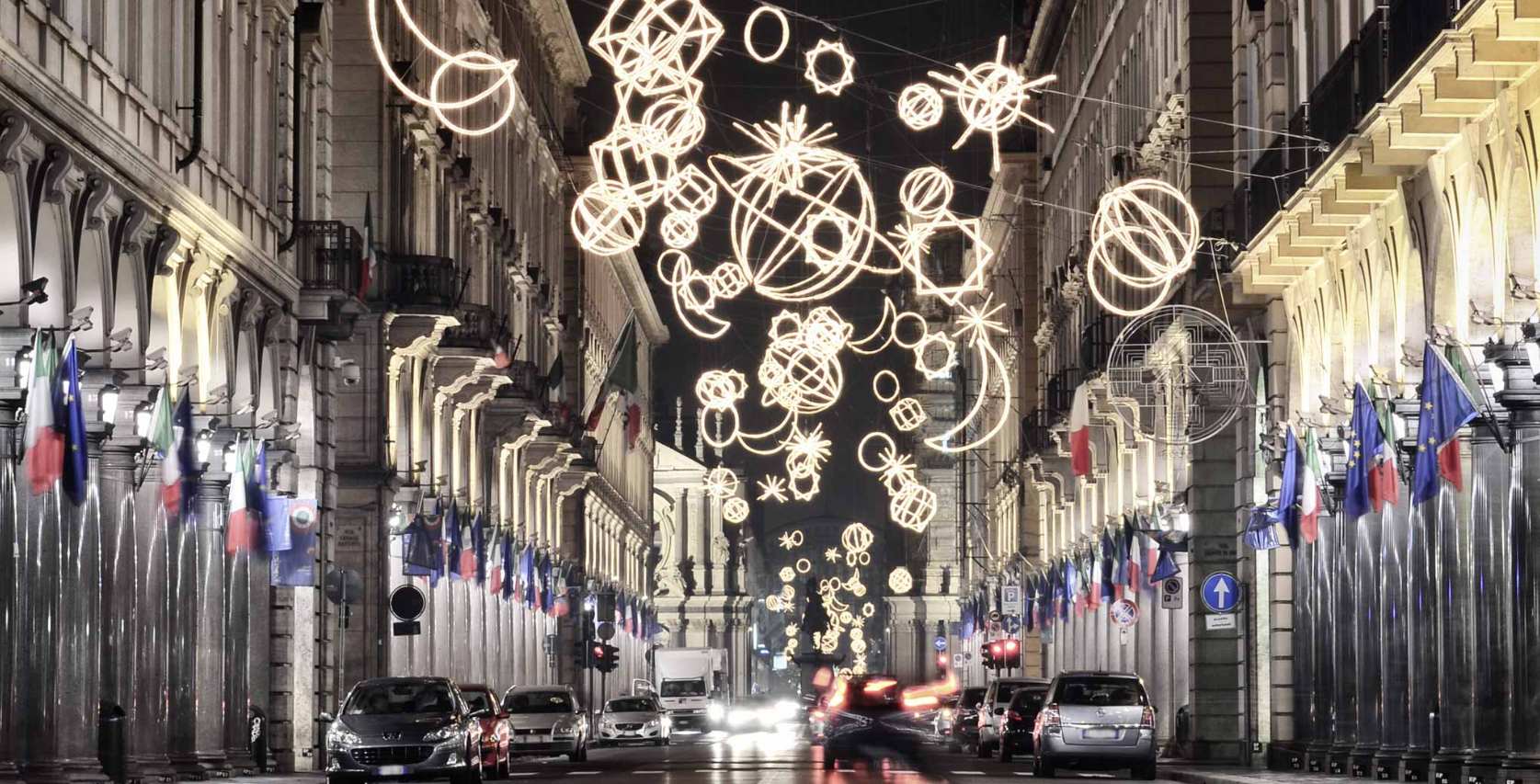
Illuminating your home’s exterior at Christmas has never been so accessible. Light curtains, cascades of light, three-dimensional figures, LED projectors, illuminated branches—the market today offers solutions for any space, from a twenty-square-meter balcony to a country garden. The problem isn’t finding the right lights, but choosing the right ones for your space, your electrical system, and the desired result.
First of all: certification
The minimum requirement for any outdoor light is IP44 certification or higher. This code indicates that the product is protected against splashes of water from any direction—an essential requirement for withstanding rain, snow, and winter humidity. Products with IP65 or IP67 ratings offer even greater protection, suitable for installations directly exposed to the elements.
An often overlooked detail: even extension cords and fittings used outdoors must be certified for outdoor use. An indoor extension cord connected to outdoor lights is a weak point in the installation, regardless of the quality of the lights themselves.
Light Curtains: The Most Immediate Effect
Light curtains are the most versatile solution for balconies, windows, and gutters. They can be installed in minutes, cover large surfaces with an immediate visual impact, and adapt to any style—from classic warm white to vibrant multicolor.
The choice of curtain depends primarily on the size of the surface to be covered and whether or not an external outlet is available. Battery-powered curtains have solved the problem for those without outlets on the balcony, but they require periodic battery checks—it’s best to opt for models with rechargeable batteries or a built-in solar panel for long installations.
The density of the light points is the factor that most influences the result: a curtain with 300 LEDs over 3 meters creates a very different effect than one with 100 LEDs over the same surface. Generally speaking, the higher the density, the fuller and more convincing the effect.
Light cascades and illuminated branches: the detail that makes the difference
Light cascades—vertical chains of LEDs that descend like luminous threads—work particularly well on balconies with railings or overhanging eaves. They create a soft, dynamic effect, especially in models with the twinkle function that simulates the natural flickering of light.
Illuminated branches are the ideal solution for those who want to bring light even to unconventional spaces: outdoor vases, flowerbeds, garden corners, and entryways. They bend, orient, and adapt to any shape—much more flexible than a traditional chain.
Illuminated Figures: The Garden as a Scene
Reindeer, stars, illuminated trees, snowmen—three-dimensional outdoor figures have reached a very high level of quality. The galvanized steel models with integrated LEDs are weather-resistant for many seasons and retain their shape even after years of use.
The choice of figure depends on the available space and the overall effect you want to create. A large garden can accommodate a complex composition; a smaller entryway or terrace is better enhanced with a well-chosen single element—a large star, a luminous reindeer, a tree of lights—rather than with many crowded elements.
LED Projectors: The Solution for Those Short on Time
The LED Christmas projector is the answer for those who want a spectacular result without elaborate installations. It can be placed on the ground or mounted on a wall, oriented toward the surface to be illuminated—facade, hedge, tree, garage—and transformed the exterior of your home in minutes.
The most advanced models project animated effects: moving snowflakes, shooting stars, rotating lights. The quality of the projector is measured by the clarity of the pattern and the stability of the rotation mechanism—a poor-quality motor produces vibrations that make the effect unstable and annoying.
Managing consumption: timers and automation
Leaving the lights on all night is a habit that’s difficult to justify from an energy perspective. Mechanical timers are inexpensive and reliable for scheduling automatic on and off times. Smart timers—controlled via app—add the ability to manage the lights remotely, create customized schedules, and monitor consumption in real time.
For those who install many lights on different surfaces, centralized management with smart multi-socket outlets becomes almost indispensable. A single app that controls all the string lights, awnings, and projectors in the garden is much more convenient than five separate mechanical timers.
Those who want to explore the entire range can find a complete selection of Outdoor Christmas Lights designed to withstand the Italian winter—from curtains to projectors, from waterfalls to three-dimensional light figures.
Installation: the plan comes before the scale
Last tip, and perhaps the most useful: plan before you start. A walk around the house with pen and paper—where the external outlets are, where you want to create the focal point, how much cable is needed to connect everything—avoids the classic problem of a short cable exposed when you’re already at the top of the stairs.
The most beautiful installations aren’t necessarily the most expensive or the most elaborate. They’re the ones that are planned: a well-placed, well-lit, statement piece is worth much more than ten haphazardly arranged elements.
